· pain-guides · 6 min read
7 Causes of Upper Back Pain Between Your Shoulder Blades (And What to Do About It)
That nagging ache between your shoulder blades is more common than you think. Here are the top causes of upper back pain and simple ways to find relief.
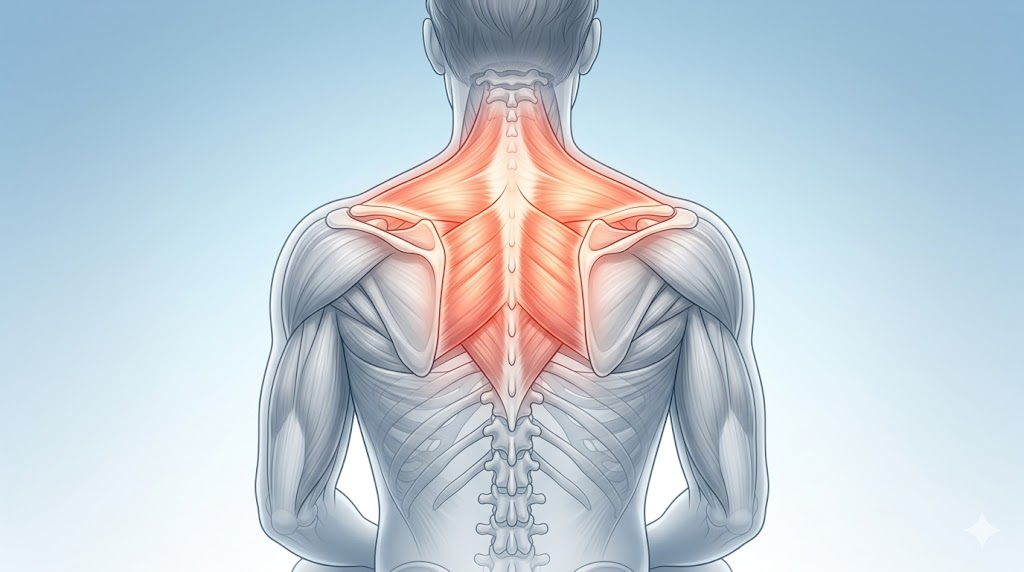
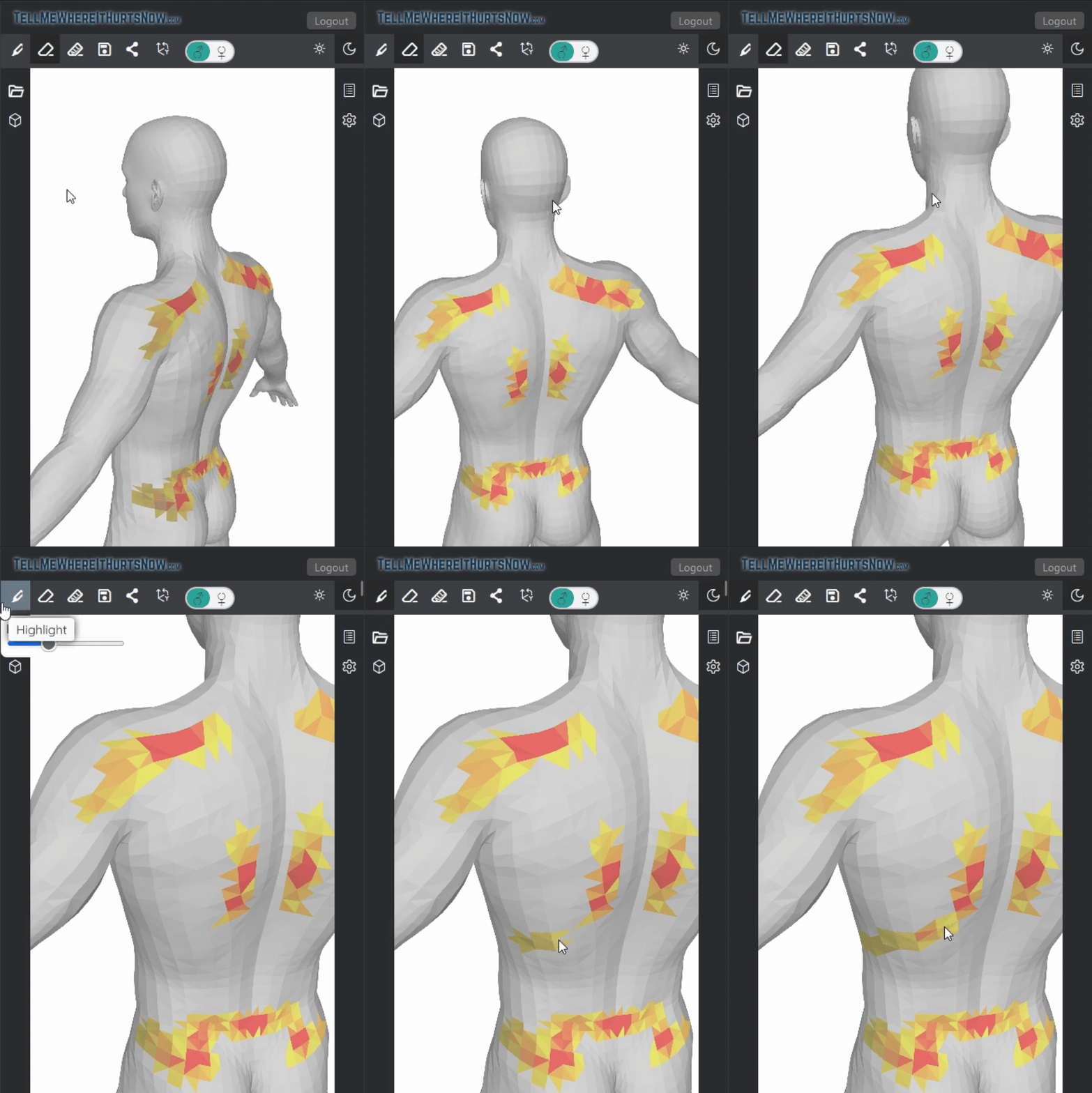
That nagging ache between your shoulder blades? You’re definitely not alone. Upper back pain — especially the kind that settles right between the shoulder blades — is one of the most common complaints we see. In fact, when we analyzed nearly 100 pain maps from real users over the past month, the upper back and trapezius area was highlighted in almost half of them. It’s the number one spot where people feel pain.
The good news is that most causes of interscapular pain (the medical term for pain between the shoulder blades) are treatable and often preventable. Let’s break down what’s really going on back there.
What Causes Upper Back Pain Between the Shoulder Blades?
The area between your shoulder blades is home to several muscles, including the trapezius, rhomboids, and parts of the erector spinae group. These muscles work overtime to support your posture, stabilize your shoulders, and keep your spine aligned. When something goes wrong with any of them, you feel it. (Learn more about how pain mapping helps you communicate with your doctor.)
Here are the seven most common culprits:
1. Poor Posture and “Tech Neck”
This is the big one. Hours spent hunched over a laptop, craning your neck toward a phone screen, or slouching in a chair put enormous strain on the muscles between your shoulder blades. Over time, your trapezius and rhomboid muscles become overstretched and fatigued, leading to that familiar dull ache.
The modern workday is essentially a recipe for upper back pain — and the data backs it up. The bilateral, symmetrical pain patterns we see across pain maps strongly suggest postural causes rather than acute injuries.
2. Muscle Strain or Overuse
Lifting something heavy, starting a new workout routine, or even sleeping in an awkward position can strain the muscles in your upper back. Unlike posture-related pain, muscle strain tends to come on suddenly and may feel sharper.
Common triggers include overhead movements, rowing exercises, carrying heavy bags on one shoulder, and repetitive arm motions.
3. Stress and Tension
When you’re stressed, your body tenses up — and the neck and shoulders are usually the first to bear the brunt. Chronic stress keeps these muscles in a constant state of low-level contraction, which leads to stiffness, knots, and pain between the shoulder blades.
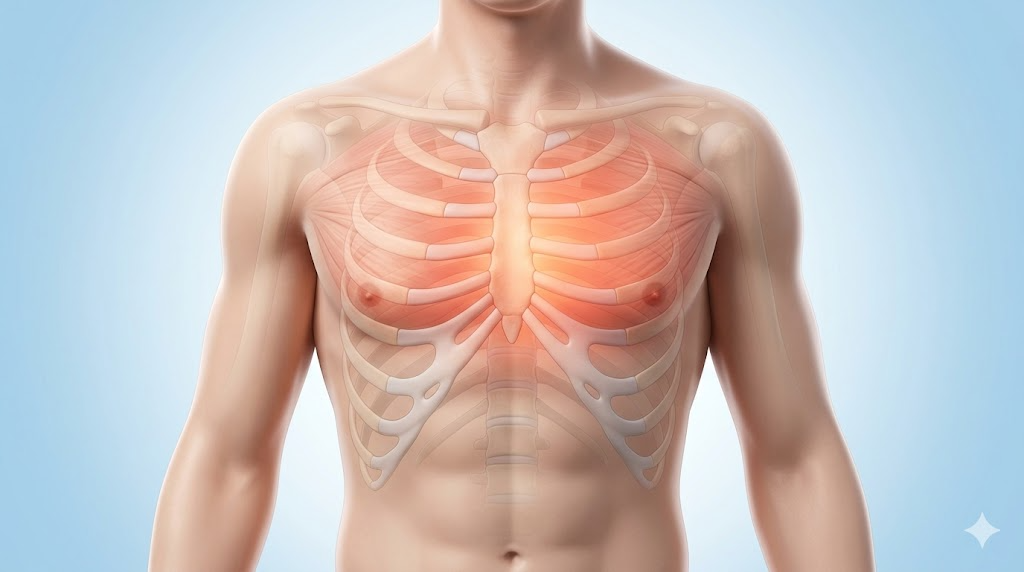
If your upper back pain gets worse during busy work weeks or stressful periods, tension is likely a major contributor. Stress-related tension can also show up as chest tightness or pain.
Not sure what’s causing your upper back pain? Map exactly where it hurts on a 3D body model and share it with your doctor. Create a free pain map in 30 seconds →
4. Weak Core and Upper Back Muscles
Your core and upper back muscles work together to hold you upright. When your core is weak, your upper back muscles have to compensate, leading to fatigue and pain. Similarly, weak rhomboids and lower trapezius muscles can’t properly retract your shoulder blades, allowing them to round forward and creating strain.
5. Herniated or Bulging Disc
While less common in the thoracic spine than in the lower back or neck, a herniated disc in the upper back can cause pain between the shoulder blades. This type of pain may radiate around the rib cage and can be accompanied by numbness or tingling.
6. Osteoarthritis or Degenerative Changes
As we age, the joints and discs in the thoracic spine can wear down, leading to stiffness and pain. Osteoarthritis in the facet joints of the upper spine is a gradual process that typically worsens over time and may feel worse in the morning or after periods of inactivity.
7. Myofascial Trigger Points
Trigger points — those tender “knots” in your muscles — are extremely common in the trapezius and rhomboid muscles. They can refer pain to other areas, creating a broader ache across the upper back. Sitting at a desk all day is one of the most reliable ways to develop them.
How Do I Relieve Pain Between My Shoulder Blades?
For most people, upper back pain between the shoulder blades responds well to simple, consistent self-care. Here’s what actually works:
Stretch regularly. The doorway stretch (stand in a doorway, place your forearms on the frame, and lean forward) opens up the chest and relieves tension in the upper back. Cat-cow stretches and thoracic rotations are also excellent. Aim for a few minutes every hour if you sit at a desk. For a more targeted approach, see how AI can help you find the right stretch for your specific pain.
Strengthen your upper back. Rows, band pull-aparts, and face pulls help strengthen the rhomboids and lower trapezius. Stronger muscles fatigue less easily and maintain better posture naturally.
Fix your workstation. Your monitor should be at eye level, your elbows at roughly 90 degrees, and your feet flat on the floor. A small investment in ergonomics pays off enormously for your upper back.
Move more often. Set a timer to stand up and move every 30 to 45 minutes. Even a brief walk or a few shoulder rolls can reset your posture and relieve muscle tension.
Try heat or massage. A heating pad on the upper back for 15 to 20 minutes can relax tight muscles. Foam rolling or a tennis ball against a wall can help release trigger points.
Manage your stress. Deep breathing, meditation, and regular exercise all help reduce the muscle tension that stress creates. Your upper back will thank you.
Tracking your pain helps you find what works. Log your upper back pain before and after trying these stretches to see real progress. Start tracking for free →
When Should I See a Doctor for Upper Back Pain?
Most upper back pain resolves within a few weeks with self-care. However, you should see a healthcare provider if:
- The pain is severe or gets worse over time
- You experience numbness, tingling, or weakness in your arms or legs
- The pain follows an injury or fall
- You have unexplained weight loss, fever, or night sweats along with back pain
- The pain doesn’t improve after two to three weeks of home treatment
- You have difficulty breathing or chest pain alongside upper back pain
These symptoms can indicate more serious conditions that need medical evaluation.
Show Your Doctor Exactly Where It Hurts
Describing upper back pain in a rushed appointment is frustrating — “it’s kind of between my shoulder blades, maybe more on the left?” doesn’t give your doctor much to work with.
With TellMeWhereItHurtsNow.com, you can mark exactly where your pain is on a 3D body model, note the intensity, and share a visual record with your healthcare provider. It’s free, takes about 30 seconds, and gives your doctor the clarity they need to help you faster.